

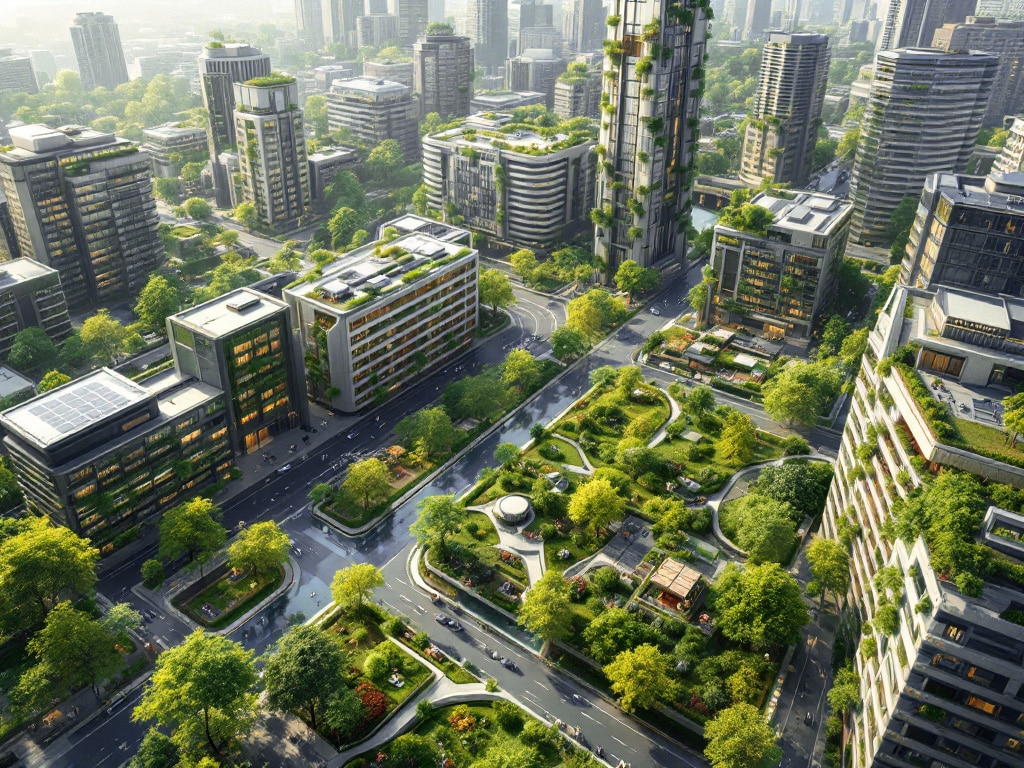
IMPACTERR

Materials & Processes
IMPACTERR Project: Multi-scale Impacts of Circular and Spatial Planning for the Assessment of Regeneration and Resilience
The IMPACTERR project aims to assess the potential for de-artificialization of a metropolis by identifying barriers (data, regulatory, land-related). It develops a systemic methodological framework integrating geography, urban planning, engineering, ecology, and environmental sciences to accelerate regenerative urbanism. The project quantifies the environmental, social, and economic co-benefits of renaturation and de-sealing, taking climate change into account at the scale of a metropolis.
IMPACTERR connects micro (de-artificialization sites, biodiversity assessment, heat islands), meso (material flows and climate downscaling), and macro (urban planning and Zero Net Artificialization) scales to identify operational levers and facilitate knowledge transfer to planning stakeholders.
IMT Nord Europe maps the material flows resulting from de-artificialization and estimates the potential environmental impacts based on their treatment methods, using an agent-based model. This territorial metabolism approach enables the quantification and qualification of urban and industrial symbioses necessary for implementing a circular economy for urban de-artificialization.
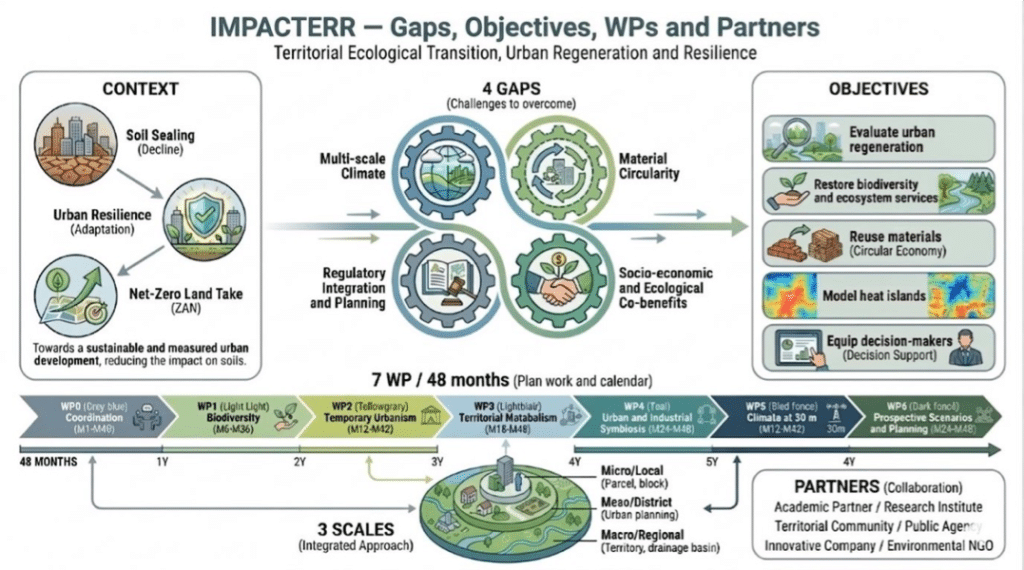
U-LILLE (TVES), MinesParis (ISIGE), IMT Nord Europe (CERI MP)


Want to learn more about
"IMPACTERR" ?
Our teams at the IMT Nord Europe research centres are here to help
CONTACT US