

SHIPAIR

Energy Environment
SHIPAIR Project: SHIPping emission’s contribution to AIR pollution in urban harbour area
Although considerable progress has been made in regulating ship emissions and understanding their impacts, major challenges remain in accurately assessing and mitigating the effects of ship emissions on air quality (AQ). It is therefore necessary to improve our knowledge of shipping-related pollutants and their atmospheric fate in order to better mitigate their effects on air quality and human health in urban areas.
The interdisciplinary SHIPAIR project combines experimental approaches and numerical modelling to address three main scientific questions:
1. What are the new or poorly characterised compounds emitted by ships?
Quantitatively and qualitatively characterise regulated pollutants (SO₂), as well as non-regulated pollutants such as NOₓ, BC, CO, CO₂ and PM₂.₅.
Quantitatively and qualitatively characterise emissions of VOCs/SVOCs, metals and fine particles, in terms of particle number and chemical composition (particles smaller than 1 µm).
Generate a comprehensive dataset on ship emissions in different French ports.
2. What is the atmospheric fate of ship emissions?
Assess the contribution of SO₂ to new particle formation in port areas and cities.
Quantitatively and qualitatively determine the potential of ship emissions to form secondary organic aerosol (SOA).
Develop a more relevant modelling framework to assess their impact on air quality at the urban scale.
Develop the first set of scenarios for future trends and support future legislation, based on new modelling methodologies and more detailed emission inventories.
3. What is the oxidative potential of ship emissions?
Determine the intrinsic oxidative potential (OP) of shipping emissions.
Assess the relationship between OP and the metals and oxidised organic compounds measured in particulate matter.
Determine the contribution of shipping emissions to urban OP, compared with other sources, in port cities.
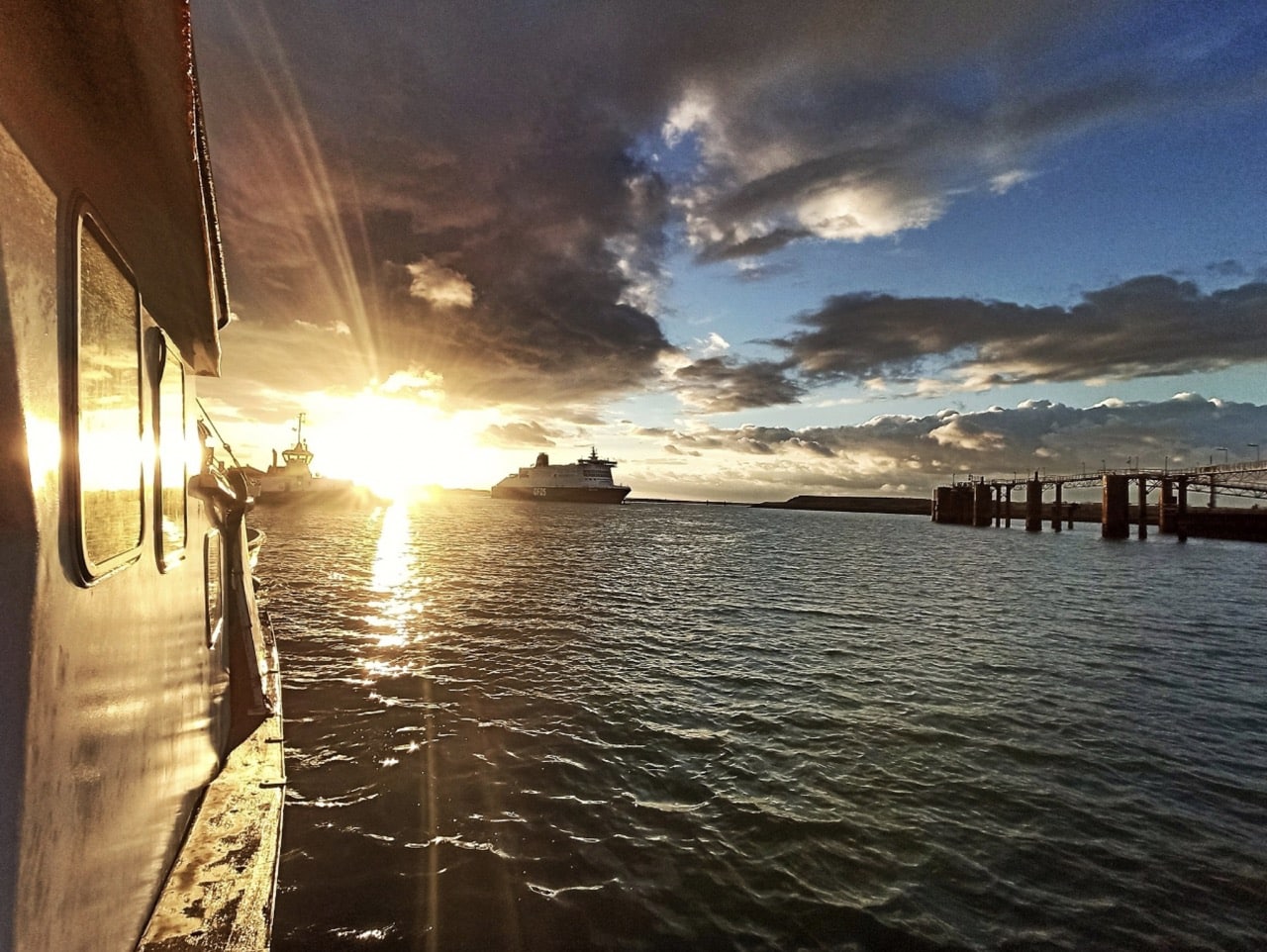
SHIPAIR is actively contributing to the development of a new observational database through an intensive field campaign in the ports of Dunkirk and Le Havre, and investigates the fate and impact of ship-related pollution through long-term measurements at an urban supersite in Marseille (Longchamp).
In addition, SHIPAIR is developing and implementing a new modelling framework. To ensure that the contribution of ship emissions is representative of different urban environments, three ports — Dunkirk, Marseille and Le Havre — are included in the modelling.
The project benefits from the operational expertise of the three partners responsible for air quality monitoring in these regions, enabling methodological improvements in the development of atmospheric emission inventories to be shared and consolidated.
The Centre for Education, Research and Innovation in Energy and Environment (CERI EE)
CERI EE coordinates the field campaigns in Dunkirk, in collaboration with the LCE laboratory at Aix-Marseille University and Atmo Hauts-de-France. A wide range of pollutants was measured using the OMEGA mobile platform, including VOCs (PTR-ToF-MS and GC-FID), CH₄, CO and CO₂ (Picarro), as well as the chemical speciation of PM₁ (AMS).
CERI EE also participated in the field campaign in Le Havre, conducted by Atmo Normandie, to measure VOCs (GC-FID) and CH₄, CO and CO₂ (Picarro).
In addition, the contribution of different emission sources and new emission factors will be determined and used as input data for the new models. Data from the field campaigns will be made openly available through the AERIS data platform.
List of partners and coordinator
Coordinator:
Yelva Roustan, CEREA (Centre for Teaching and Research in Atmospheric Environment)
Partners:
CERI EE – IMT Nord Europe
LCE (Laboratory of Environmental Chemistry)
IGE (Institute of Environmental Geosciences)
ATMOSUD
ATMO Normandie
ATMO Hauts-de-France
Main funding body: French National Research Agency (ANR)


Want to learn more about
"SHIPAIR" ?
Our teams at the IMT Nord Europe research centres are here to help
CONTACT US