


OSEAMS

Energy Environment
OSEAMS Project: Tropospheric Ozone in Southeast Asia - Budget and Mitigation Strategies
The OSEAMS Project
At global and regional scales, tropospheric ozone (O₃) controls the oxidative capacity of the atmosphere and affects climate change. At the local scale, it is a regulated pollutant with adverse effects on human health and natural ecosystems. Although reductions in its precursors (volatile organic compounds – VOCs – and nitrogen oxides, NOₓ) have been achieved, some countries are struggling to lower ozone concentrations because of its complex formation chemistry and regionally transported plumes.
In this context, the Sixth Assessment Report of the Intergovernmental Panel on Climate Change (IPCC) projects a significant increase in ozone across large parts of Southeast Asia over the coming decades. Unlike other regulated pollutants, which are directly emitted by anthropogenic activities, ozone is formed through the oxidation of VOCs in the presence of NOₓ during periods of sunlight. The secondary nature of ozone makes it difficult to implement effective emission-reduction measures.
Although chemical transport models are commonly used to develop such reduction strategies, modelling results are still associated with significant uncertainties related to emission inventories and the simplified representation of chemical and physical processes in the models. Alternative approaches to support the design of reduction measures for this pollutant are therefore essential, particularly in a field involving major socio-economic considerations.
The work proposed within OSEAMS builds on a new technique recently developed in France to measure the ozone production rate (OPR). This new metric makes it possible to study the tropospheric ozone budget, in particular by quantifying the contributions of local chemical production and long-range transport, and also to assess the effectiveness of emission-reduction strategies.
The project aims to transfer knowledge of this new technology to a region where slowing down, or even reversing, the increase in ozone concentrations is a major challenge. In order to identify the most effective ozone reduction solutions for Taiwan, and more broadly for Southeast Asia and other regions worldwide, we propose to (1) identify the main pathways of ozone formation and distinguish between the contributions of local chemical production and long-range transport, and (2) assess the reduction measures implemented in Taiwan and other Southeast Asian countries.
The proposed tasks are to:
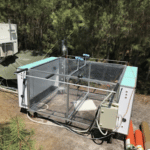
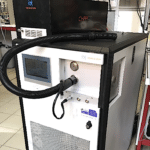
(i) build an OPR instrument in Taiwan;
(ii) conduct a detailed study of the ozone budget based on the deployment of two OPR instruments at contrasting sites in Taiwan;
(iii) carry out a detailed characterisation of ozone formation chemistry through simulation chamber experiments; and
(iv) assess past, current and future ozone reduction measures implemented in Taiwan and ultimately propose ozone reduction strategies.
The work carried out as part of these tasks will be supported by 0-D/3-D modelling. An original aspect of this research lies in the use of in situ observations of the ozone budget to develop reduction strategies for this densely populated pollution hotspot.
Taiwan will serve as an open-air laboratory to (1) assess the potential of real-time, in situ monitoring of the ozone budget for air quality monitoring networks and (2) develop tropospheric ozone reduction strategies that will benefit policymakers in Taiwan and France and, in the medium term, those in other countries.
The Centre for Education, Research and Innovation in Energy and Environment
CERI EE leads the project and coordinates several tasks:
Develop and optimise an instrument for measuring the ozone production rate in ambient air, and assemble a second instrument for the Taiwanese team.
Investigate ozone formation chemistry in a simulation chamber for air masses representative of Taiwan, and assess how this chemistry has evolved following the implementation of mitigation measures over the past three decades.
Participate in an intensive measurement campaign in Taiwan at two contrasting sites (urban/rural) in 2025 to characterise the ozone budget and investigate its formation chemistry.
List of partners and coordinator:
IMT Nord Europe (France) – CERI EE
National Central University – Department of Atmospheric Sciences
Main funder
ANR (France)
NSTC (Taiwan)







Want to learn more about
"OSEAMS" ?
Our teams at the IMT Nord Europe research centres are here to help
CONTACT US